Category: Staying Resilient

Stories of rising, healing, and becoming.

  • When being one in a million isn’t a compliment

    When being one in a million isn’t a compliment

    Let’s start with some good news.

    In May, I started a new round of medications that have truly changed my life. While the nutritional work I’ve done over the past several months made a dent, the meds have made a difference. Before, a single meal was a quarter cup, tiny, unsatisfying, and often painful. That may not sound monumental, but for me, it’s huge. I’ve split that meal into two smaller ones to avoid overwhelming my system, but this is progress. Tangible, hopeful, energizing progress.

    And it doesn’t stop there!

    I began Graston and physical therapy at the start of June, and while my body definitely feels like it’s been through a few rounds in the ring, it’s working. My posture, once slumped forward, tugged inward by dense scar tissue, is improving. The scar tissue was pulling everything toward my belly button, distorting my core and triggering constant back pain and headaches. Now, I can stand taller. My back breathing a small sigh of relief. It’s sore, but it’s not screaming. And that matters!

    So yes, forward momentum is happening. I feel it in my body and my spirting. But forward momentum doesn’t erase the fact that I’m still a bit of a medical anomaly. This was exhibited when I met with my physical therapist the first time. Well intentioned as they were, her initial reaction of, “wow, that’s quite the roadmap on your abdomen. I’ve never done graston on someone with such intense scars” doesn’t bode well for me.

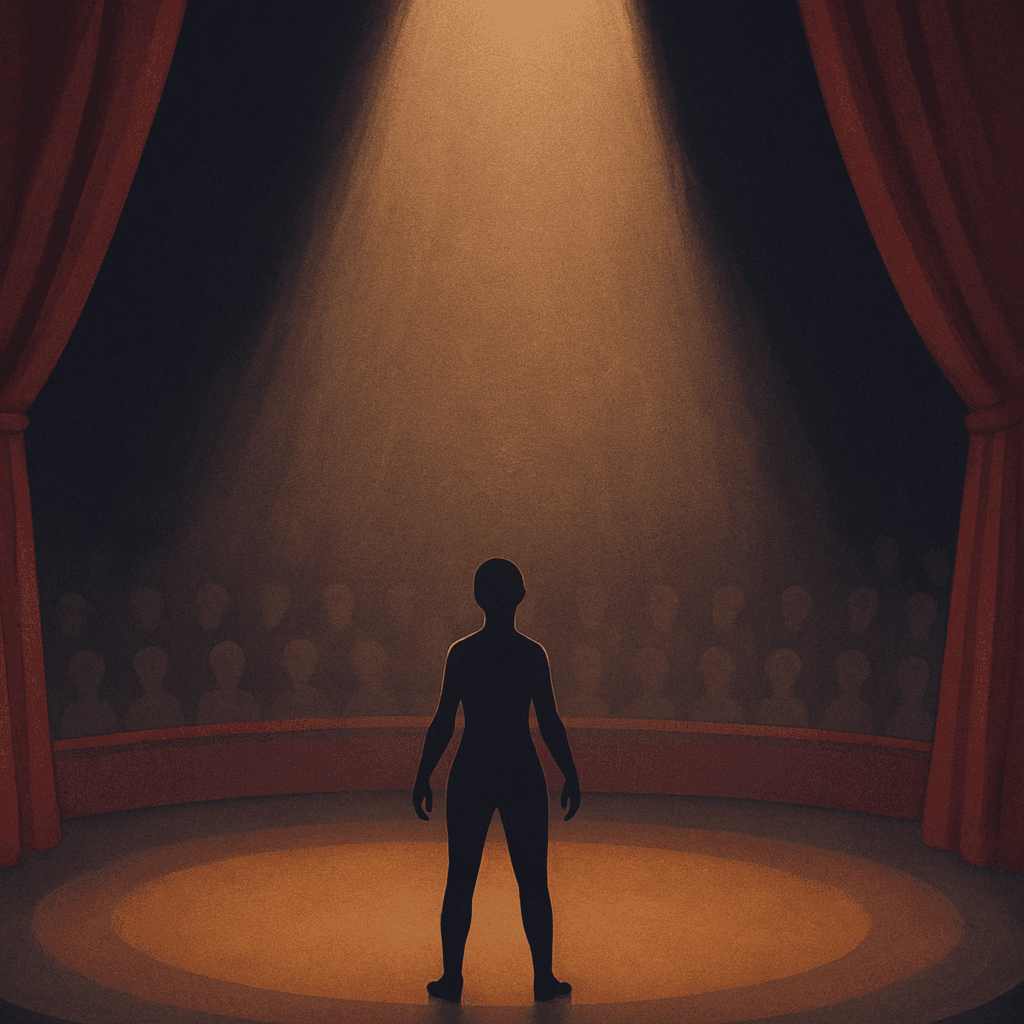
    Sometimes being “one in a million” isn’t a badge of honor. It’s a spotlight you didn’t ask for.

    Doctors light up when they read your chart; not because you’re getting better, but because you’re fascinating. You’re the case study, the textbook chapter come to life. They marvel at what makes you rare, but forget to see the full human standing in front of them.
    Stage

    It’s like being part of some twisted talent show—except the talent is surviving things most people can’t even imagine. And what’s even crazier, it’s absolutely nothing you would’ve chosen for yourself.

    Let’s rewind for a second. I was born with a rare congenital condition called Tracheoesophageal Fistula with Atresia (TEF). I dare you to say that 10 times fast! It’s a condition that occurs in about 1 in every 5,000 births worldwide. I have Type E, the rarest subtype, affecting only about 4% of those diagnosed with TEF. So even from the beginning, I was statistically unique. And not in the fun, lottery-winning kind of way.

    And the medical curveballs didn’t stop here. Here’s a couple more though I could tell you even more:

    1. When I was pregnant with my youngest son, I developed eclampsia and had fourteen grand mal seizures. Fourteen. My son was born via emergency c-section just seconds before the seizures began. A miracle in motion. A harrowing memory I won’t soon forget. Between 1 and 10 pregnant women out of every 10,000 are affected.
    2. Or how about this: shingles. Not once, not twice, not even three times, but four times. And I’m only 36. It’s rare to get shingles before 40. Four times? that puts me in the lucky 1.2% club (can I exchange that for airline miles).

    All that to say, that my body isn’t normal. Is never going to be normal. And latches on to rarity like it’s going out of style.

    When people say, “Wow, you’re so strong,” I know they mean well. But sometimes, I don’t want to be strong. I just want to be normal. I want to eat without calculating. Walk without pain. Talk to doctors about solutions, not symptoms they’ve never seen and have no clue how to treat.

    Being different is often romanticized, especially in media and storytelling. But when it’s your reality, being unique can feel isolating. It can make you feel like the world is watching, but not really seeing you. Like you’re standing under a spotlight in a Cirque Du Freak sideshow (great book series by Darren Shan, by the way), when all you really want is a seat in the audience with everyone else.

    But here’s the truth I’m clinging to: progress is happening. It may be slow and sore and stitched together with scars, but it’s real. And I wouldn’t be me without it.

    Maybe being one in a million isn’t always good. But surviving one-in-a-million odds? That’s something else entirely.

    Stay tuned. Stay resilient.
  • You look like you again

    You look like you again

    It’s incredible how someone who knows you well can reflect you back to yourself in just a few words.

    Recently, a group of us had gone to the airport to pick up my niece for a special weekend of wedding dress shopping ahead of her upcoming nuptials. I hadn’t seen her in person in several months, and we were all buzzing with excitement to help her find the dress.

    Now, I hadn’t seen my niece in several months. She’s not just my niece, though. I’m the youngest in my family, and I grew up much closer in age to my nieces and nephews than to my own siblings. In many ways, they were my first real peers; summer trips, late-night chats, goofy traditions, and all the growing pains of life tackled side by side. She and I have a bond that goes beyond the typical aunt-niece dynamic, as most of my older nieces and nephews do. We’ve shared adventures, inside jokes, and a closeness that’s lasted into adulthood.

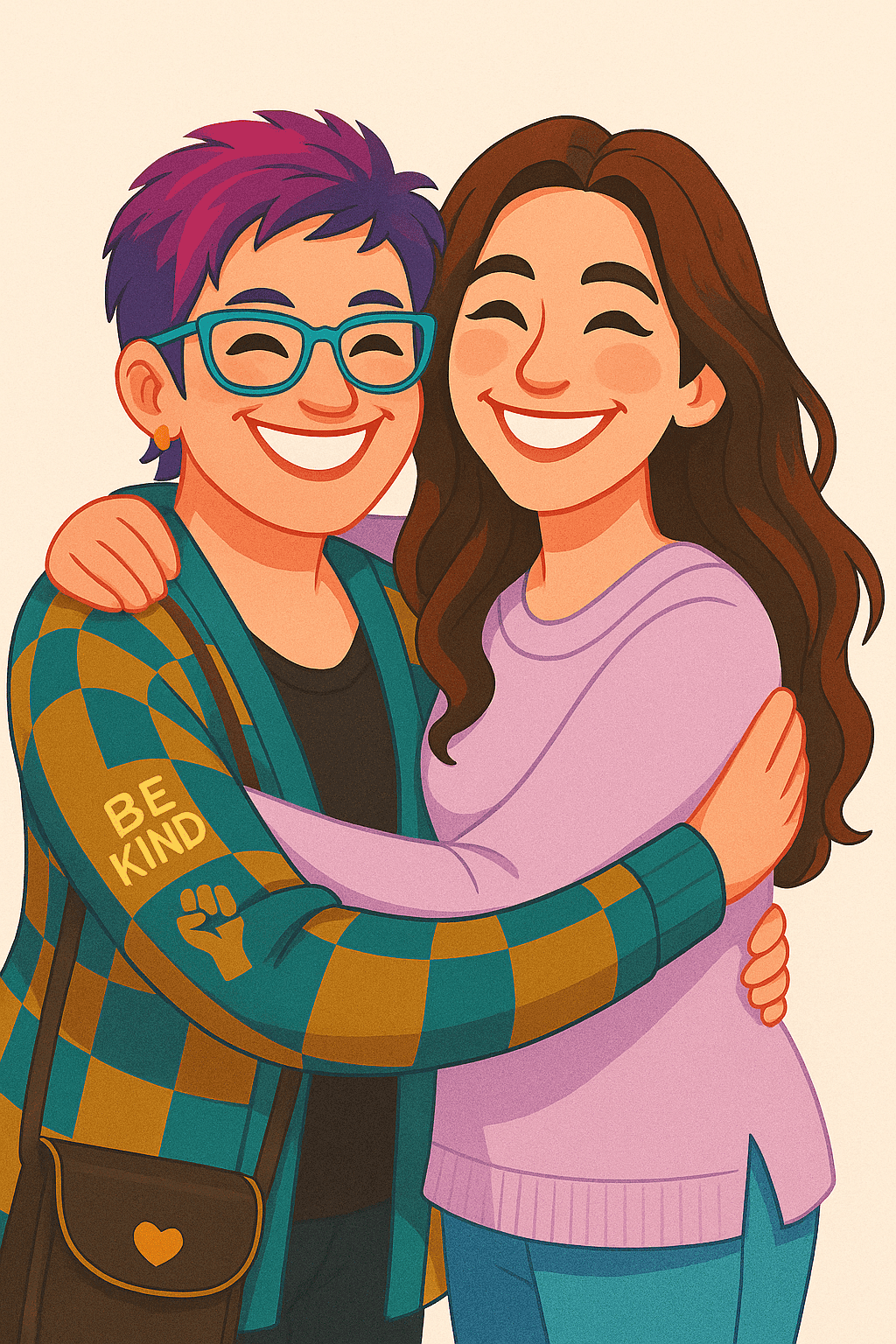
    Illustration of two women hugging and smiling, one wearing a plaid jacket printed with 'BE KIND'

    When we saw each other at the airport, she looked at me for a long moment, and said something I wasn’t prepared for:

    “You look like you again.”

    Just six words. But they carried the weight of years.

    Because she was right.

    About fifteen years ago, fresh out of college and stepping into the workforce, I started changing. Not just my wardrobe, but my personality. I softened my edges, streamlined my voice, and wore what I thought working professionals should wear. I traded in colorful hoodies and quirky tees for blazers and beige. I told myself it was maturity, professionalism. In reality, I was molding myself into what the world expected and slowly stepping further and further away from who I really was.

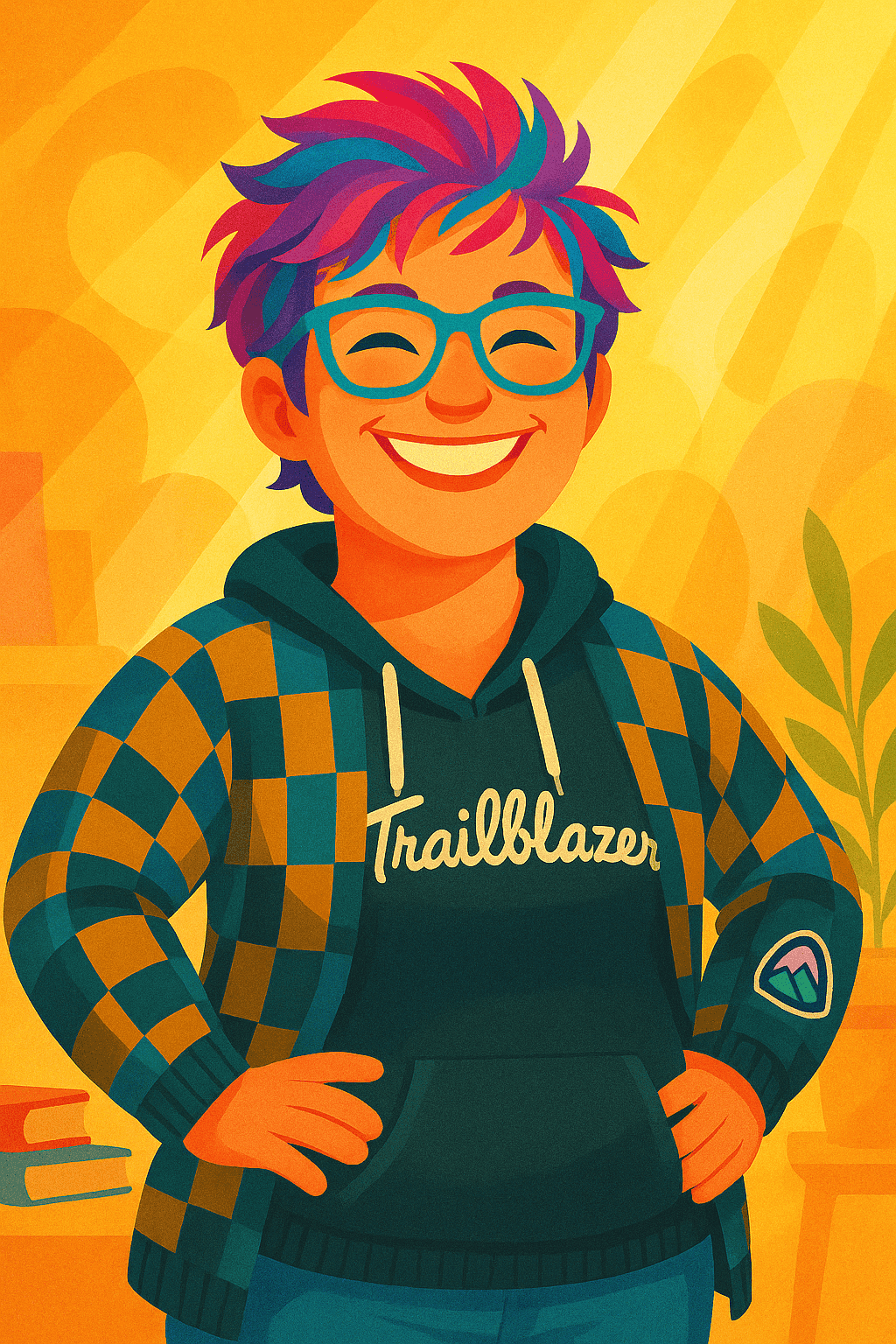
    Only recently have I started reversing that. Piece by piece, I’ve reclaimed the parts of me that I buried under the pressure to conform. My hair is short and spiky again, and proudly dyed in a variety of colors depending on the week or month. I wear graphic T-shirts that make me laugh, hoodies that feel like home, and I speak with a voice that feels like mine. I’ve learned how to bring my full self — nerdy, expressive, vibrant — into both my personal and professional life.

    That’s what my niece saw the moment she saw me. She didn’t see a costume or a mask or a projection. She saw me.

    And the timing of that moment mattered more than I realized.

    Because the truth is, I haven’t been feeling great. My health has been unpredictable, my energy inconsistent. Some days are better than others, and while I’m making progress and slowly moving forward, it’s still hard. It’s still a lot.

    But making these changes, leaning back into who I really am, embracing my quirks and creativity, showing up authentically in a world that often rewards sameness, has been a turning point in my healing. It’s not a cure. But it’s a comfort. It’s a kind of medicine that doesn’t come in a bottle. It reminds me that even when my body feels out of sync, I can still feel grounded in who I am. I can still feel like me.

    Illustration of a smiling woman with bright multicolored hair and teal glasses, wearing a Trailblazer hoodie and a checkered jacket

    And feeling like yourself? That’s powerful.

    Because it means you’re still here. Still fighting. Still showing up.

    So yes. I do look like me again.

    Not because everything is easy or perfect, but because I’ve made the choice to stop hiding. To live as fully and truthfully as I can, even on the hard days. Especially on the hard days.

    And hearing someone I love say it out loud? That’s the kind of affirmation that sticks with you for a long time.

    Stay tuned. Stay resilient.

  • How I Found Belonging by Speaking Up

    How I Found Belonging by Speaking Up

    If you would’ve told me a few years ago that I’d be speaking on stage, let alone leading workshops, I probably would laughed (nervously). Confidence didn’t always come easy, especially as someone navigated a male-dominated industry with a disability. But what I’ve learned in my journey is this: your story is your strength and when you lead with authenticity, you open doors, not just for yourself, but for others too.

    This year, I’m honored to have three speaking opportunities at two amazing conferences within the Salesforce ecosystem, each focused on a topic close to my heart: inclusive innovation, women’s empowerment, and the power of showing up, even when it’s scary.

    Here’s where I’ll be (and what I’ll be sharing):

    Utilizing AI in Salesforce While Minding the (Accessibility) Gap

    WITness Success 2025 | Louisville, KY | August 19-20

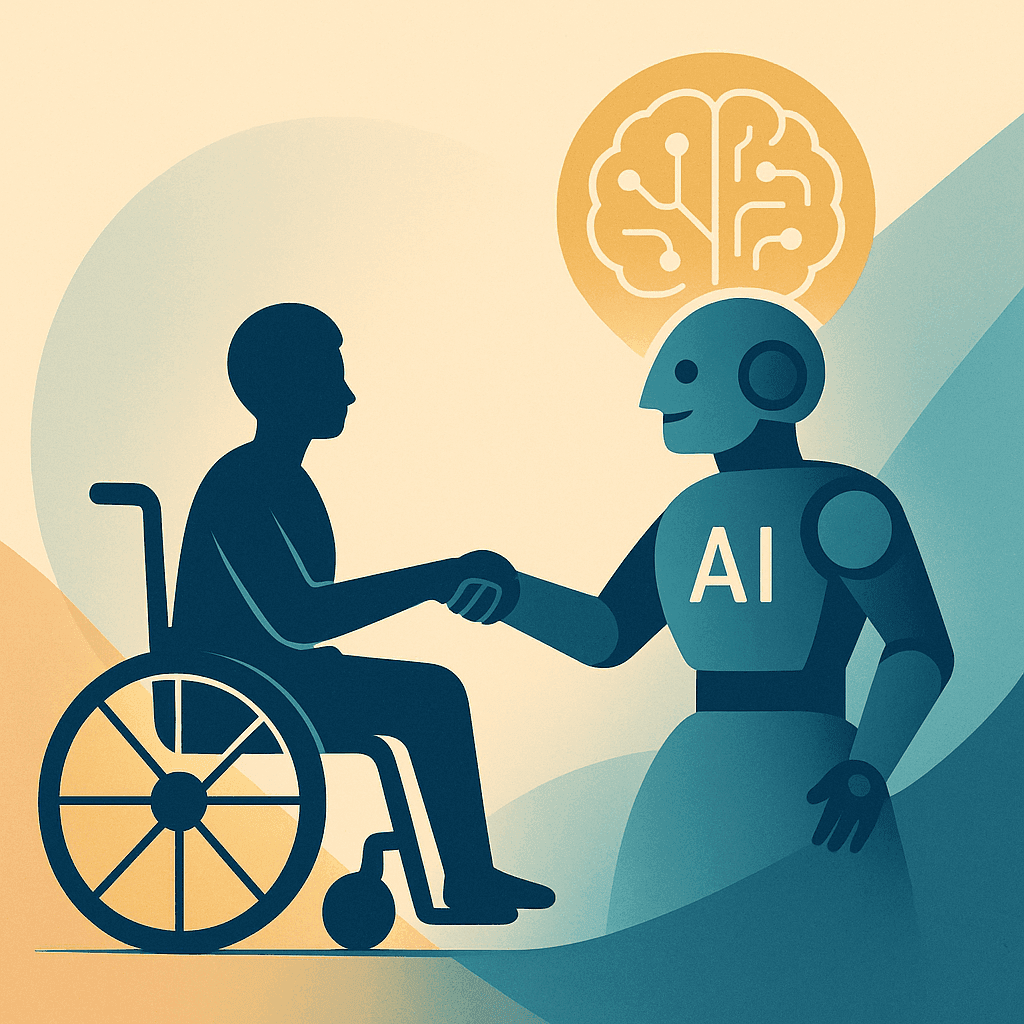
    AI is changing the way we work, but accessibility can’t be left behind. In this session, I’ll explore how to evaluate Salesforce AI tools like Einstein and Agentforce with accessibility in mind. We’ll talk about building a culture of inclusive innovation, advocating for equitable AI adoption, and ensuring that as technology evolves, no one is left out.

    Illustration of a person in a wheelchair shaking hands with a friendly AI robot

    Whether you’re new to AI or already exploring automation and insights in Salesforce, this session will give you practical tools to assess accessibility gaps, ask the right questions, and lead inclusively.

    Women helping women

    Imposter to Innovator: Women Supporting Women to Redefine Tech

    WITness Success 2025 | Louisville, KY | August 19-20

    Imposter syndrome doesn’t discriminate. It affects brilliant, accomplished women every day, and holds us back from taking the stage, leading the meeting, or going for that next big role. In this interactive 90-minutre workshop, we’ll dig into how imposter syndrom shows up and how to silence the inner critic. Together, we’ll:

    • Map out our personal board of mentors, sponsors, and allies
    • Practice advocating for ourselves using “power statements”
    • Learn how to support one another as we climb the ladder
    • Build a personalized action plan to step into leadership with confidence
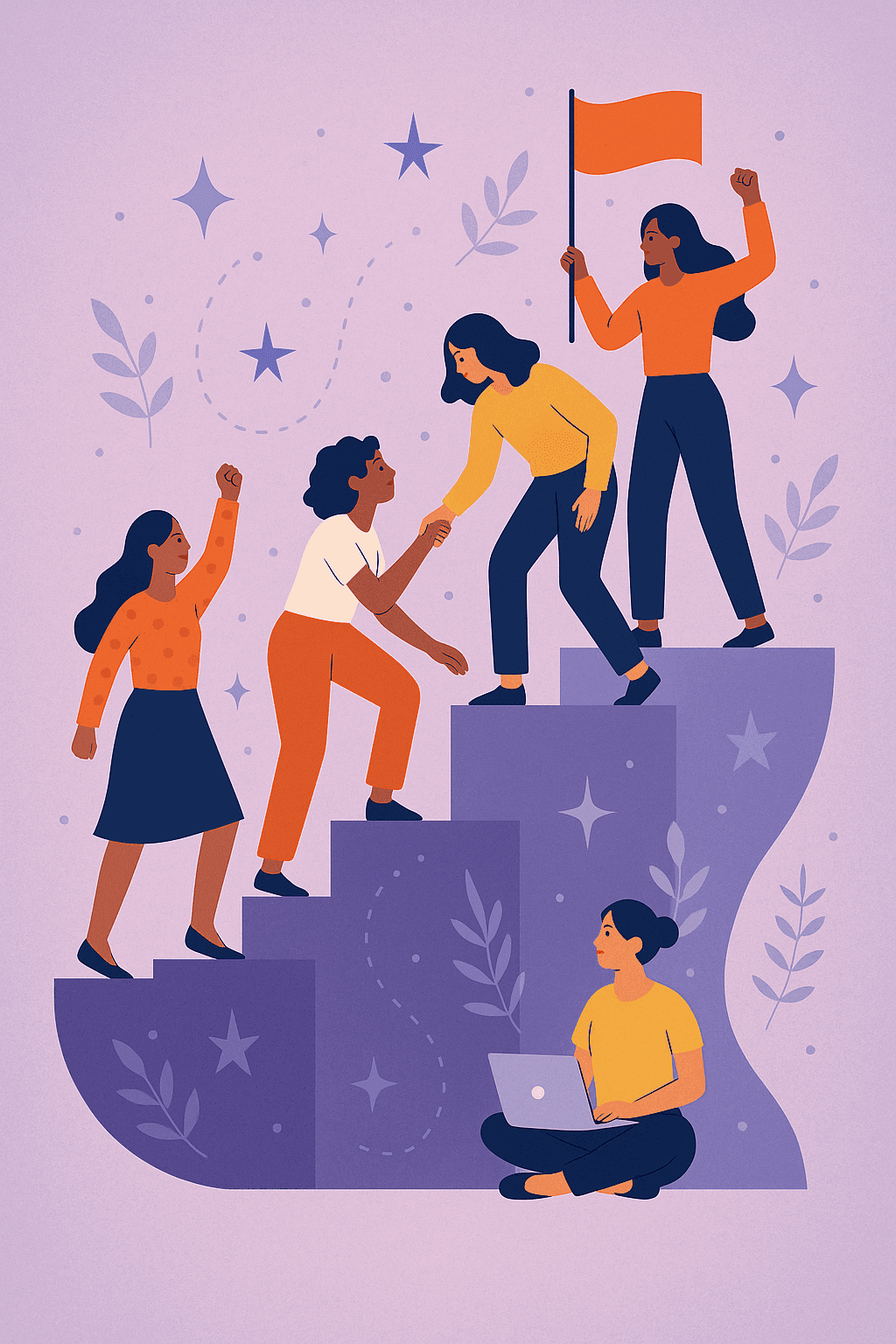
    Women helping women

    This isn’t about fixing ourselves. It’s about supporting one another, lifting each other up, and redefining what leadership in tech truly looks like.

    Confidence in the Clouds: Presenting, Leading, and Thriving with a Disability

    Mile High Dreamin’ 2025 | Denver, CO | August 27-28

    This one’s personal. Confidence didn’t come naturally to me, and it was even harder when I worried my disability would make me seem less capable in meetings or on stage. But I’ve learned that our vulnerabilities are part of our power.

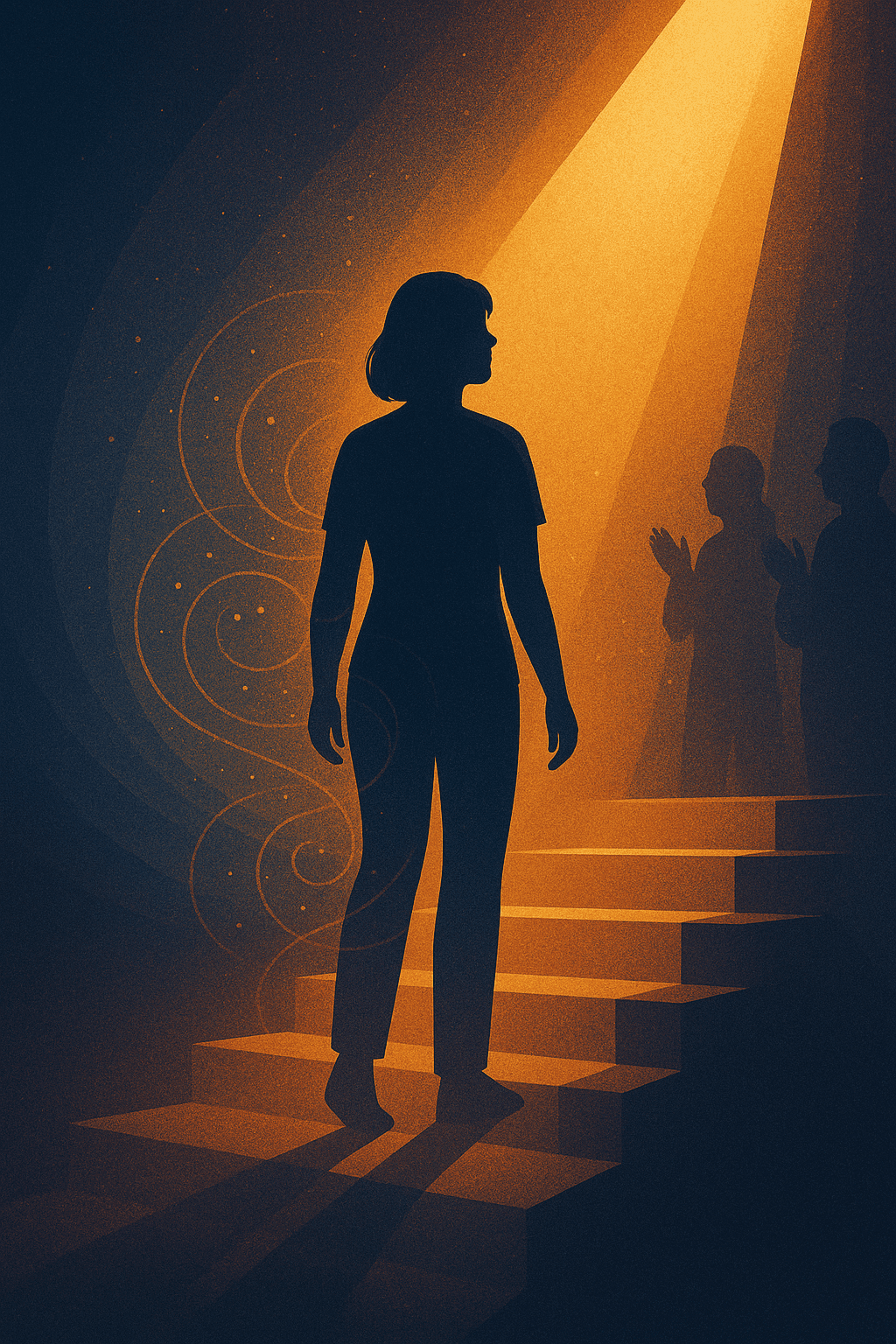
    Illustration of a woman's silhouette climbing a spotlit staircase while shadowy figures applaud

    In this session, I’ll share tools, mindsets, and community support that helped me overcome stage fright, grow into leadership, and start thriving; not in spite of my disability, but because of the resilience and perspective it’s given me.

    If you’ve ever felt like you don’t belong, this session is for you. Let’s talk about what it means to lead with empathy, advocate for yourself, and turn perceived limitations into leadership strengths.

    Whether it’s AI and accessibility, imposter syndrome, or finding confidence in the face of doubt, each of these sessions reflects a piece of my journey, and maybe yours too. These talks aren’t just about sharing knowledge; they’re about creating space, lifting others up, and redefining what leadership and innovation really look like in today’s tech-driven world.

    If any of these topics resonate with you or if you’ve ever felt like the tech world wasn’t built with you in mind, or you’re ready to lead in a more inclusive, authentic way, I hope you’ll join me. Come to connect, reflect, and grow alongside a community that believes in showing up for each other.

    Le’ts learn. Let’s lead. Let’s redefine the future together. See you at WITness Success 2025 and Mile High Dreamin’ 2025!

    Stay tuned. Stay resilient.

  • Sleep-Deprived but Thrift-Store Fabulous

    Sleep-Deprived but Thrift-Store Fabulous

    Healing is rarely linear, but rather, more of a wobbly, spiraling scribble than a straight line. Lately, though, I’ve started to notice a few small wins tucked between the harder moments.

    The new medications seem to be making a subtle difference; nothing dramatic, but enough that I’m clinging to it like a buoy. Graston therapy is up next, and physical therapy has been surprisingly encouraging. It’s not glamorous, but each forward step, however small, feels like reclaiming a little piece of myself.

    That said, sleep continues to be the a battle I can’t win. Despite every effort, the exhaustion lingers like a fog that won’t lift. Still, I’m trying to meet each day with grace (or at least grit) and reminding myself that survival, some days, is progress.

    But not everything has been gray skies. I’m both thrilled and slightly terrified to say I’ll be speaking at two incredible conferences this summer! More on that soon. The chance to step into rooms filled with community, connection, and purpose again is such a gift. It feels like a little spark returning, and I’m grateful for the light.

    With the season shifting, I’m craving warmth, not just in temperature but in spirit. I want sun on my skin, laughter in my lungs, and adventures with my family. There’s something healing about summer in its simplicity: barefoot walks, popsicles melting too fast, and not knowing where the trail leads but following it anyway.

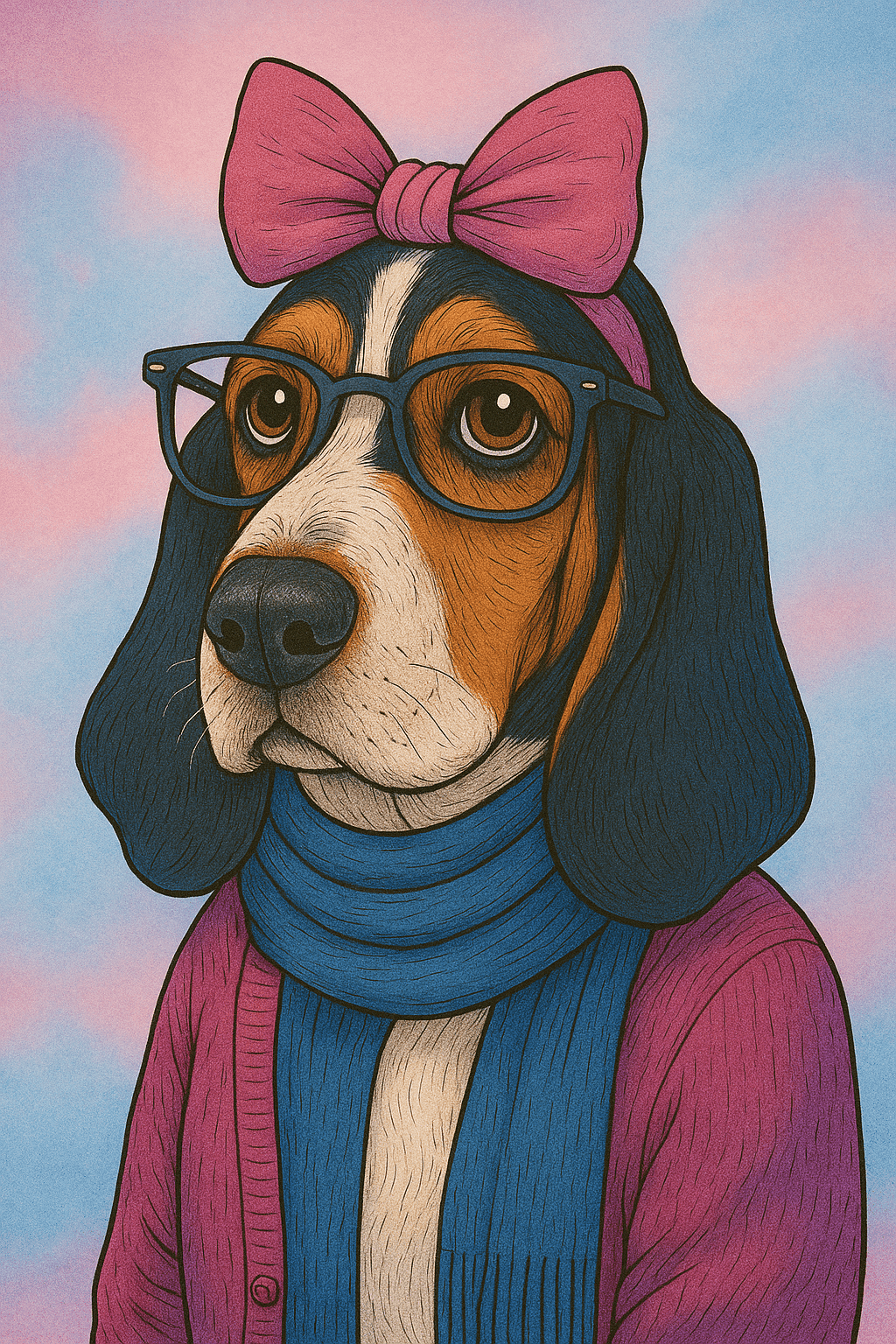
    Illustration of a basset hound wearing glasses, a pink hair bow, a blue scarf, and a pink cardigan

    And then, there’s Piper.

    Ah yes, Her Royal Highness, the Basset Hound of Bargain Finds.

    This week’s unexpected plot twist came courtesy of Piper, who decided that her daily kibble and backyard routine simply weren’t cutting it. Apparently, she needed a break. A reinvention. A new aesthetic.

    So she slipped away, quite literally, and was later spotted strutting the aisles of the local Goodwill, nose high and tail wagging like she owned the place. Employees reported her inspecting a shoe rack, pausing to admire a sequined handbag, and briefly lounging on a pile of corduroy jackets like the queen she is. One kind soul even tried to offer her a snack, but Piper, unimpressed by mere dog treats, was clearly there for fashion.

    When I arrived, slightly panicked and entirely mortified, she gave me the kind of look only a Basset Hound can deliver, a mix of unapologetic smugness and “I told you I needed enrichment.” And honestly? Fair.

    I couldn’t stop laughing the rest of the day. In the midst of stress, medical appointments, and relentless fatigue, Piper gave us a story we’ll be telling for years. She reminded me that joy shows up in the strangest places, like the clearance aisle of a secondhand store.

    So here’s to small victories, big personalities, and the dogs who refuse to let life be boring.

    May we all find a little mischief, a lot of sun, and something fabulous on life’s discount rack.

    Stay tuned. Stay resilient.

  • However Motherhood Comes to You

    Mother’s Day is beautiful, but for many of us, it’s also complicated.

    It’s not just flowers and breakfast in bed. It’s a reminder of everything it took to get here or everything we’re still hoping for. For me, it’s all of it: joy, grief, resilience, and the kind of love that gets built through heartbreak.

    I always knew becoming a mother might be hard. I was born with a rare birth defect that’s shaped much of my life—and my body. Years of surgeries left me with significant damage to my ovaries and uterus. On top of that, I was diagnosed with PCOS. The odds weren’t in my favor. I couldn’t conceive without help. And even with help, nothing was guaranteed.

    Still, I kept going.

    Our journey started with the most incredible gift, our first child, Ky, who came to us through adoption. That moment changed everything. It showed me that motherhood isn’t about biology, it’s about love. It’s about showing up.

    But I still longed to experience pregnancy. We turned to IVF. Between bringing Ky home and welcoming our daughter Charlotte, I experienced six miscarriages. Six times I dared to hope. Six times I had to grieve and begin again.

    Charlotte was our first IVF miracle. Her birth was healing in so many ways. But the pain didn’t stop there.

    I had another miscarriage before conceiving Oliver, our precious baby boy, through IVF. He was born alive. He stayed for one hour. It wasn’t enough, but it was everything. His brief life left a lasting imprint on my heart.

    Then, Lennox. Our rainbow. Our fighter. Another miracle through science and love, who came after so much loss.

    The truth is, my path to motherhood was shaped by the same medical challenges that have shaped my whole life. My healing journey and my motherhood journey are inseparable. Every scar, every surgery, every diagnosis played a role. And somehow, in all of that, I still got the family I was meant for.

    That’s why this quote holds such deep meaning:

    “However motherhood comes to you, it’s a miracle.” – Valerie Harper

    If your story doesn’t look like the ones in picture frames or parenting magazines, you’re not alone. Love doesn’t care how it gets to you. And motherhood, however it comes, is still a miracle.

    Stay tuned. Stay resilient.

  • When the Past Meets the Present

    Let’s talk about triggers.

    For me, they’re physical. Tangible. Things my senses grab hold of and drag me back to moments I’d rather forget. One of the biggest is driving by, or worse, going into, the hospital where I spent so much of my childhood. A place etched into my story in ways that still haunt and inspire me.

    Many of you may not know, because we’ve intentionally chosen to keep this part of our life private, but our youngest son has medical challenges of his own. I’m not sharing details now or in the future, because his story is his. But I will say this: we spend a lot of time at that very same hospital.

    That overlap is hard. It’s triggering. And it’s more than just uncomfortable, it’s emotionally exhausting. Panic attacks have become a frequent visitor. The guilt I carry walking into that space, knowing what it did to me and what it might be doing to him, is crushing. But I also know the medical team there saved my life and made me who I am today. I bring him here because I want the same for him. To be happy and healthy.

    Whenever they take him back to the operating room and I’m left behind in the waiting room, it all catches up with me. The fight to stay calm, to not fall apart, to keep it together for him. It’s relentless. He’s already scared. He doesn’t need to see that fear in me.

    But I’m sharing this because trauma doesn’t magically go away. Mine is mostly medical, shaped by years of hospitals and surgeries. For others, it might look different. But it’s no less real. No less heavy.

    So here’s my ask: Assume positive intent. Show up with compassion. Choose kindness. Whether you’re in a workplace, online, standing in line, or just passing someone on the street, be the kind of person who makes others feel safe.

    Today, after my son was taken back to the OR and I started to unravel, a kind nurse noticed. She didn’t fix it. She didn’t try to say the perfect thing. She just saw me. Reached out. Grounded me. And that moment mattered. That one act of humanity was everything.

    Let’s do more of that.

    “Healing doesn’t always look like progress. Sometimes it looks like holding on.”

    Stay tuned. Stay resilient.

  • Finding My Bearinings in the Storm

    I met with my gastroenterologist this morning, and while there’s still a lot we don’t know, we are taking action and that makes all the difference right now.

    The team is ordering a new round of routine bloodwork and additional scans to evaluate what might be contributing to the ongoing issues. We also added consultations with endocrinology and nutrition to the plan. Both are important next steps in addressing the broader picture, especially as we look at how my body is (or isn’t) processing food, and what might help bring some consistency back into the mix.

    The big-picture goal? To stop any further deterioration and start creating some stability in my symptoms. That doesn’t mean things will be fixed overnight but it does mean we’re shifting from reaction to strategy. I’ll be continuing with Graston therapy to target the scar tissue and adhesions that could be limiting function and contributing to pain. With luck (and a lot of persistence), we’ll begin to see signs of progress from there.

    It’s still hard. My energy is limited, and there are good hours and bad ones. But for the first time in a while, it feels like we’re steering this ship somewhere instead of just drifting. And that hope is something I’m fiercely holding onto.

    Thank you for walking this journey with me. Every message, prayer, and word of encouragement makes this heavy path feel just a bit lighter.

    Stay tuned. Stay resilient.

  • Strength in the Stillness

    There aren’t any major changes to my health right now. And honestly, holding steady feels like a small but important win. I’m still navigating the day-to-day challenges, but now with a clear action plan in place, I feel a renewed sense of hope and momentum.

    I’m also getting ready to ease back into work, and I couldn’t be more grateful. At Sercante, I have the privilege of consulting with clients to build strategies that bridge marketing, sales, and service — creating seamless digital experiences that truly put people first. I get to do this within the Salesforce community, which has been more than just a professional network for me; it’s been a source of belonging, inspiration, and growth.

    This work has always been close to my heart because it’s about more than just business, it’s about accessibility, inclusion, and building authentic connections. After everything I’ve been through on the health front, that mission feels even more personal now. I understand on a deeper level how vital it is to create spaces, both physical and digital, where every individual feels seen, supported, and valued.

    Reconnecting with this passion is helping me reclaim a piece of myself, and I’m so excited to step forward with that fire still burning strong.

    Thank you for being part of my journey. Your support continues to be a light on even the hardest days.

    Stay tuned. Stay resilient.

  • hope in motion

    Now that I’m home and grounded in a plan, I want to share what my healing journey is starting to look like. It’s a mix of hope, experimentation, and listening closely to what my body is trying to tell me.

    First up: I’ll be starting Graston therapy soon. For those who aren’t familiar, it’s a form of manual therapy that uses stainless steel tools to gently break up scar tissue and fascial restrictions under the skin. The idea is that by releasing adhesions, we can improve mobility and in my case, potentially encourage my organs to shift back into their intended place. If successful, it could even eliminate what’s known as a “blind pouch,” which may be a big contributor to my ongoing symptoms. Like all treatments, it’s not without risk—there can be discomfort, bruising, or inflammation—but the potential for meaningful relief is giving me something I haven’t had in a while: cautious optimism.

    I’m also meeting with an endocrinologist to take a closer look at my hypoglycemia. On the rougher days when I can’t eat or fully digest food, my blood sugar crashes hard, leading to episodes of passing out, extreme weakness, and cold sweats. It’s scary, and it’s a constant stressor. If we can better regulate my glucose levels, even when food is minimal, it could help me stay safer and more stable.

    A nutritionist will also be part of my support team, helping to design a diet that gives me the best chance at absorbing the nutrients I can take in. The goal is to be intentional, making every bite count, focusing on healing foods that nourish rather than trigger more issues.

    There’s still a lot to figure out. Pain management is a big one. I’ve never been one to rely on medication, and I prefer natural options like corn packs, hot baths, or calming breathwork. Eventually, I hope to craft a long-term maintenance plan, something that includes gentle movement, maybe yoga, or easing my way back into the gym when the time is right. That part is months down the road, but it helps to imagine what life could look like on the other side of this chapter.

    Thank you for continuing to walk alongside me through the unknown.

    Stay tuned. Stay resilient.

  • Regrouping, Refocusing, and Rebuilding

    After a whirlwind trip, I’m back home and spent the past couple of days settling in with the kids. Their hugs and laughter always remind me why I keep fighting for answers and a better tomorrow.

    Starting today, I’m shifting focus to coordinating follow-up care here at home and getting my medical records transferred from Mayo. The new plan includes three big steps:

    Graston Therapy – This is a form of manual therapy that breaks down scar tissue using specialized tools. We’re hoping this will target one potential root cause of my issues — adhesions from past surgeries.

    Endocrinologist Consult – To address my hypoglycemia and gastric dumping, I’ll be seeing a specialist to explore if better regulation of my blood sugar might ease my daily symptoms.

    Nutrition Support – I’m also meeting with a nutritionist to find a way to nourish my body without resorting to a feeding tube. The goal being to stabilize my weight, minimize harm, and actually support my healing process.

    Despite all these efforts, my symptoms remain unchanged, and I’ve now lost 23 pounds. It’s concerning, but I’m still in the fight.

    Before leaving Mayo, additional testing suggested there may be a blind pouch at the anastomosis site where my stomach connects to the bowel. That, paired with scar tissue, could be a significant piece of the puzzle.

    To add to the mix, my latest labs revealed early signs of kidney and liver failure. It’s scary, but I’ve reversed this kind of damage before, and I believe I can do it again.

    I’m entering this next chapter open to every possible route, especially if I can avoid high-risk surgery. If there’s a homeopathic or non-invasive path to healing, I’m going to try it.

    In future updates, I will break down this new plan, dive deeper into each piece, and share what I learn along the way.

    Stay tuned. Stay resilient.